

The Technology Powering the AI Revolution
Artificial intelligence has become part of everyday digital life. People use it to write articles, generate images, analyze information, create presentations and automate tasks. Tools such as ChatGPT and other generative AI platforms have made sophisticated computing capabilities accessible through relatively simple interfaces.
When you ask an AI assistant a question or generate an image, your request triggers a series of complex computing operations. Powerful processors handle enormous amounts of data and perform calculations that allow the AI system to produce a response. Much of this work happens inside specialized data centers rather than on the device in your hand.
One company has become particularly influential in building the technology behind this process: NVIDIA. Once widely recognized for graphics cards used in gaming computers, NVIDIA now occupies a central position in the artificial intelligence industry. Its processors and computing platforms support the development and operation of some of the world’s most advanced AI systems.
So, how did a graphics technology company become so important to artificial intelligence? And what exactly does NVIDIA provide that makes modern AI possible?
What Is NVIDIA?
NVIDIA is a technology company that designs graphics processing units (GPUs), computing platforms and software used across several industries. Founded in 1993, the company initially became known for developing graphics technology for personal computers and gaming. Its GPUs helped computers render complex images, animations and visual effects more efficiently.
However, the technology behind these graphics processors had applications beyond visual computing. Artificial intelligence requires computers to perform large numbers of mathematical operations, often simultaneously. GPUs are particularly effective at this kind of processing. NVIDIA recognized the potential of using its graphics technology for scientific computing and AI development.
That decision helped move the company beyond gaming and into high-performance computing. Today, NVIDIA supplies much of the hardware and software infrastructure used to train and run modern AI systems.

Why Does Artificial Intelligence Need Powerful Processors?
To understand NVIDIA’s importance, it helps to understand what happens when an AI system is developed. AI models learn patterns from large collections of data. During training, they process examples and repeatedly adjust internal numerical parameters to improve their ability to perform a task. This requires enormous computational effort.
A traditional central processing unit (CPU) is designed to handle a wide range of computing tasks. It is good at managing instructions, coordinating operations and handling tasks that depend on one another.
A GPU, on the other hand, is designed to perform many parallel calculations. Instead of handling a relatively small number of complex tasks at a time, it can work on thousands of smaller operations simultaneously. This makes GPUs particularly useful for the mathematical operations involved in training and running many AI models.
Consider the difference:
A CPU is useful for managing general computer operations and coordinating different tasks.
A GPU is particularly effective at processing large numbers of similar calculations simultaneously.
A combination of CPUs and GPUs allows computing systems to handle complex workloads more efficiently.
This does not mean CPUs are no longer important. Modern AI infrastructure relies on different processors working together, each handling tasks suited to its architecture.
NVIDIA’s influence comes partly from its ability to build specialized GPUs and connect them into systems capable of handling demanding AI workloads.
How NVIDIA GPUs Power AI Development
NVIDIA’s GPUs are used in two important stages of AI development and operation: training and inference.
1. AI Training
Training is the process through which an AI model learns from data. A model is exposed to examples and adjusts its internal parameters based on its performance. This process involves repeated mathematical calculations across potentially billions or trillions of parameters. The larger and more complex the model, the greater the computing resources it may require.
NVIDIA GPUs help accelerate these calculations by processing many operations in parallel. Large AI developers can connect thousands of GPUs so that they work together on training workloads. This is one reason NVIDIA’s hardware is important to organizations developing large language models and other advanced AI systems.
2. AI Inference
Training does not end the computational demands of an AI model. Once a model has been trained, it must still process requests and generate responses. This stage is called inference. When you ask ChatGPT to summarize a document, the system processes your request and generates an answer using a trained model. Inference also requires computing power. The demand becomes especially significant when millions of people use an AI service or when businesses deploy AI systems that handle continuous workloads.
NVIDIA develops hardware and software designed to support both training and inference. This is quite significant because building an AI model is only one part of the process. Making that model available to users at scale requires reliable and efficient computing infrastructure.

Beyond Graphics Cards: NVIDIA’s AI Infrastructure
NVIDIA’s role in AI extends beyond selling individual GPUs. Modern AI systems often require multiple components working together. These include processors, high-speed memory, networking equipment, storage systems and software that coordinates computing workloads.
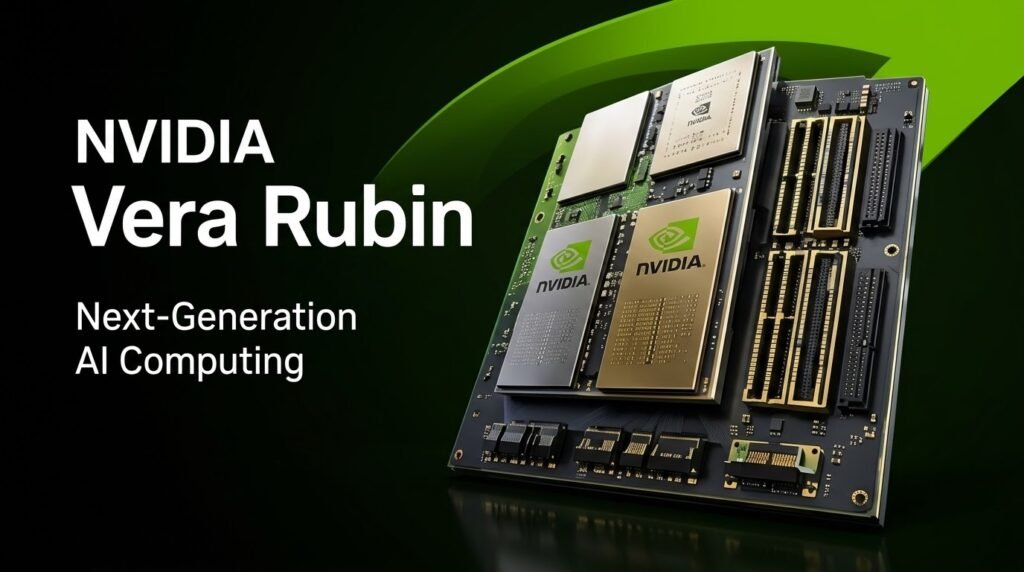
NVIDIA has developed an ecosystem that brings many of these components together. Its Blackwell and newer Vera Rubin architectures illustrate this approach. Rather than treating a GPU as an isolated component, NVIDIA designs platforms in which processors, networking and other technologies operate as an integrated computing system.
The Vera Rubin platform, announced in March 2026, brings together seven chips designed to support different stages of AI development and deployment. These include the Vera CPU, Rubin GPU and specialized networking and data-processing components.
The objective is to make large-scale AI computing more efficient and better able to handle increasingly demanding workloads. This is particularly important as AI systems move beyond simple question-and-answer interactions towards applications that can reason through tasks, use tools and carry out multiple steps.
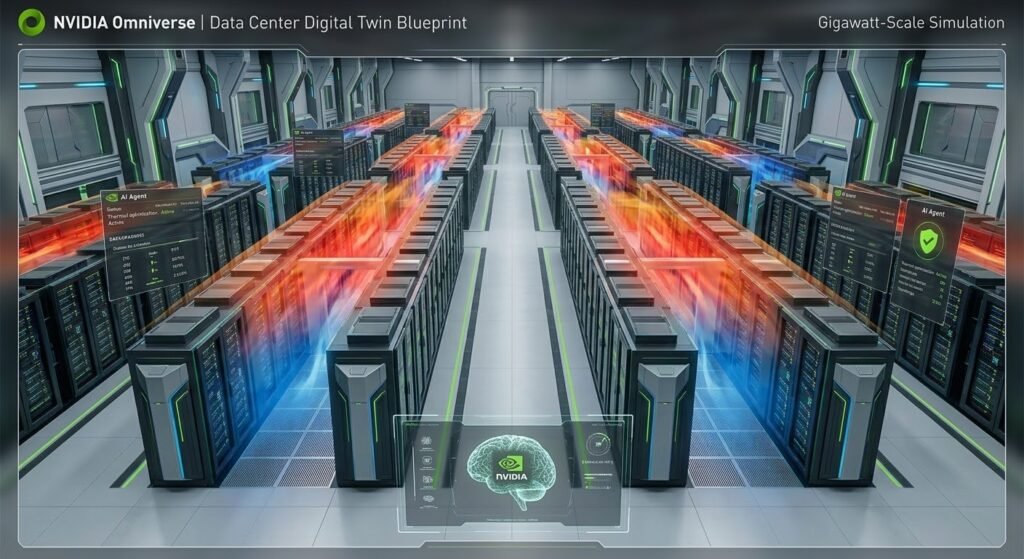
NVIDIA describes the large-scale facilities supporting these workloads as AI factories. They are specialized computing environments designed to produce and deliver AI services continuously.

CUDA
NVIDIA’s influence is not based on hardware alone. Its software ecosystem is another important part of its position in the AI industry. One of its most significant technologies is Compute Unified Device Architecture (CUDA). CUDA is a parallel computing platform and programming model that allows developers to use NVIDIA GPUs for general-purpose computing rather than limiting them to graphics processing.
CUDA provides tools and libraries that help developers build applications capable of using NVIDIA GPU resources. Over time, a large ecosystem of AI development tools and frameworks has grown around NVIDIA’s hardware and software. This creates an advantage that goes beyond the performance of an individual processor. Developers who already use NVIDIA-compatible tools may find it easier to continue building within that ecosystem.
It also helps explain why competing in the AI chip market involves more than designing a powerful GPU. Software compatibility, developer support and established infrastructure all matter.
Why Is NVIDIA So Important to the AI Industry?
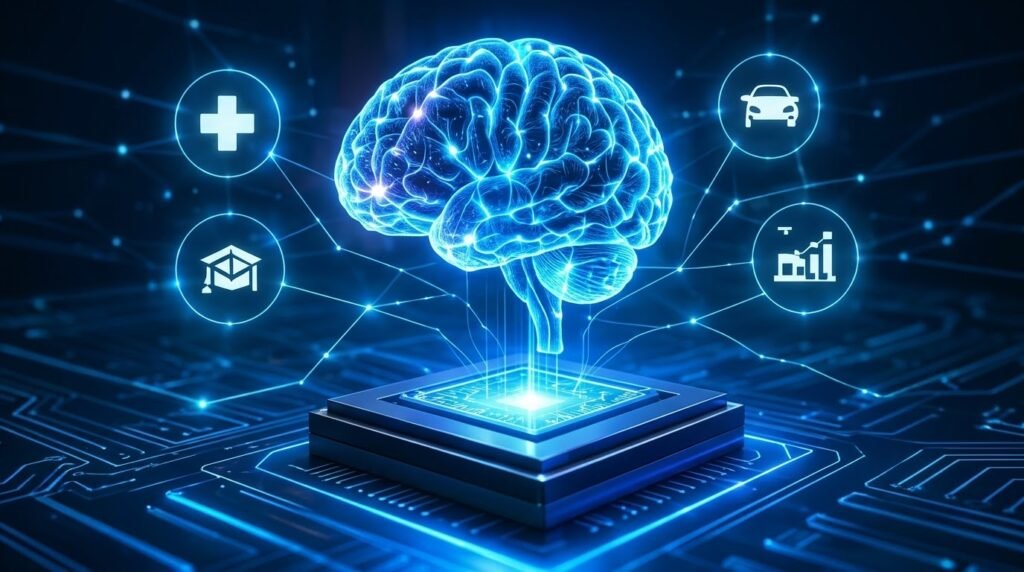
NVIDIA’s importance becomes clearer when we look at the scale of investment in AI computing. Technology companies, cloud providers, research institutions and businesses are investing heavily in infrastructure capable of training and operating advanced AI models. NVIDIA is one of the major suppliers serving this demand. The company’s influence also extends across several industries:
- Healthcare: AI systems can assist with medical imaging, drug discovery and research.
- Finance: Financial institutions use AI for fraud detection, risk analysis and customer services.
- Education: AI tools support learning, research and the development of educational resources.
- Automotive: AI computing supports driver-assistance systems, autonomous driving research and vehicle simulation.
- Manufacturing: Businesses use AI for automation, quality inspection and predictive maintenance.
NVIDIA does not independently provide all these services. Rather, its technology supplies some of the computing foundations that organizations use to develop and deploy them.
NVIDIA’s Position in the Future of AI Control?
NVIDIA has a powerful position in the AI computing market but it does not control the entire industry. Other technology companies are developing competing processors and alternative computing platforms. AMD, Intel and several specialized chip developers are working to capture parts of the market.
Large cloud providers are also developing their own AI chips to reduce dependence on external suppliers and improve the efficiency of their infrastructure. Google’s Tensor Processing Units (TPUs), for example, are designed to accelerate machine learning workloads within Google’s computing ecosystem.
There are also ongoing efforts to develop AI models that require fewer computing resources. Improvements in model architecture, quantization and inference optimization can reduce the hardware needed to deliver certain AI applications.

What NVIDIA’s Growth Means for Africa and Nigeria
The expansion of AI infrastructure has implications beyond the countries where the largest technology companies operate. For African businesses, developers and technology professionals, the growing demand for AI computing creates opportunities as well as challenges.
Businesses can use cloud-based AI services without purchasing expensive GPU infrastructure themselves. Developers can build applications on top of existing AI platforms and access computing resources through cloud providers. Universities and research institutions can also explore AI development, although access to suitable hardware, funding and technical expertise remains a challenge.
There is another important consideration: electricity and data-center infrastructure. Large-scale AI computing requires substantial and reliable power. It also depends on cooling systems, high-speed connectivity and suitable physical facilities.
For Nigeria, these requirements make the development of local AI infrastructure a wider conversation about energy supply, investment, connectivity and digital capacity. The opportunity is not limited to purchasing advanced processors. It also includes developing local applications, training skilled professionals and building services that address problems within African markets.
Tech Takeaway
NVIDIA’s growth offers a useful perspective on how much infrastructure sits behind the AI products people increasingly use. The rapid growth of artificial intelligence is often discussed in terms of new models, impressive features and what AI tools can do. But the underlying story is: behind every large AI service is a computing infrastructure that must process information, manage workloads and deliver results reliably. The performance of these systems depends on processors, memory, networking, software and the facilities that house them.
NVIDIA has become a central player because it supplies several of the technologies required to build this infrastructure. Its journey from graphics processing to AI computing also shows how technologies developed for one purpose can become essential to entirely different industries.
As AI continues to develop, the competition will not be limited to who builds the smartest model. It will also involve who can provide the computing power, infrastructure and software needed to make advanced AI practical at scale.
Samic Tech Hub