

A Nigerian student can spend an entire day surrounded by technology without learning a single technology skill. In 2026, the old playbook for breaking into the tech industry as a Nigerian student and the standard advice passed down in university lecture halls is now officially obsolete. A powerful combination of market saturation, advanced Generative AI code automation and shifting macroeconomic realities has wiped out the market for entry-level generalists.
However, as old doors slam shut, massive new infrastructure channels are opening within the African continent. Technology is changing the way businesses operate and the skills employers value. The World Economic Forum’s Future of Jobs Report 2025 identifies AI and big data, networks, cybersecurity and technological literacy among the fastest-growing skill areas through 2030.
However, this transition is not a death sentence for ambition; it is an invitation to specialize. While automation handles repetitive tasks, a massive supply deficit has emerged for individuals who possess a sophisticated blend of technical expertise, analytical depth and creative execution. Driven by the expansion of local telecom infrastructure, the growth of mobile commerce and the entry of global tech giants into the West African landscape, the modern workplace requires true competence.
For students, this creates an important question: Which technology skills are actually worth learning now?
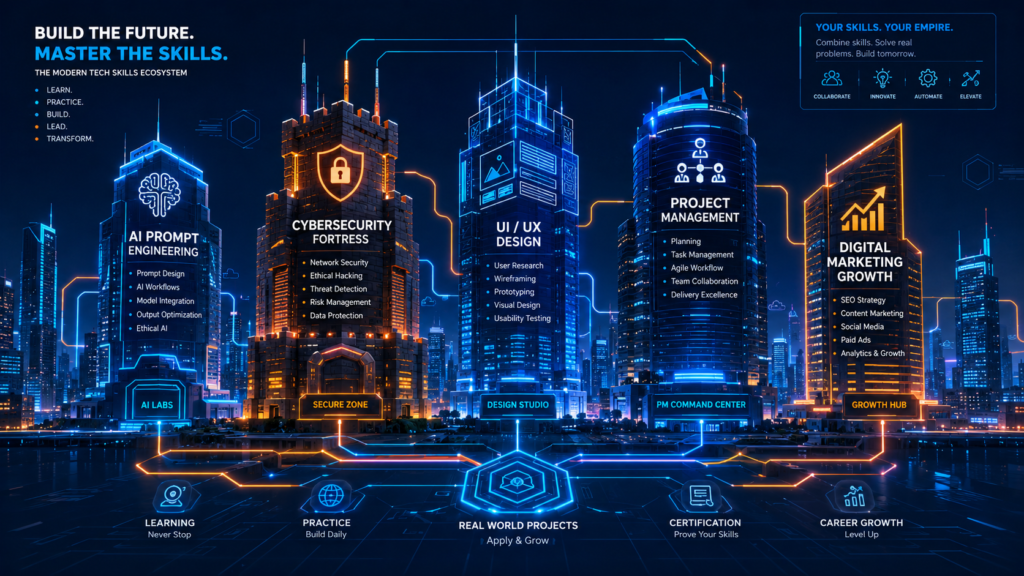
HERE ARE THE TEN HIGHLY SPECIALIZED, AUTHORITATIVE TECH SKILLS NIGERIAN STUDENTS MUST START BUILDING TODAY TO DOMINATE THE MARKET IN 2026.

1. ARTIFICIAL INTELLIGENCE & MACHINE LEARNING ENGINEERING
AI is quickly becoming part of ordinary academic and professional work. Artificial Intelligence has moved past consumer chatbots and entered structural software architecture. Companies no longer seek individuals who merely write basic code; they require developers who can integrate predictive intelligence directly into software products. AI Engineering involves taking pre-trained foundations and customizing them to solve local real-world challenges.
In Nigeria, this manifests as building machine learning models that can evaluate micro-credit worthiness for unbanked populations or training natural language processing tools to understand local colloquial variations across multiple languages. For example, building intelligent fraud detection engines for fintech apps, creating automated diagnostic assistance tools for local clinics and designing predictive logistics routing algorithms.
On the other hand, students don’t necessarily need to become machine-learning engineers. A more immediate goal is AI literacy — understanding how AI systems work at a practical level and knowing how to use them effectively. Like writing precise prompts, checking AI-generated information, using AI for brainstorming and research, summarising large amounts of information, generating and improving ideas, automating simple tasks and understanding the limitations of Generative AI.

2. CYBERSECURITY & ICT
Cybersecurity is both a career field and a basic digital competency. The financial cost of digital vulnerability in West Africa has scaled exponentially. As millions of citizens transition their primary financial lives onto mobile applications and digital wallets, the incentive for sophisticated cyber-attacks has reached historic highs. Corporations are fighting an ongoing battle against identity theft, ransomware and infrastructure vulnerabilities.
Cybersecurity is no longer a luxury department inside a bank; it is an existential business requirement across every sector. The market lacks skilled personnel who can protect digital systems, identify security architectural flaws and enforce strict data safety protocols.
Students can get some introductory familiarization by visiting online learning platforms like Coursera, Udemy, watching YouTube videos or getting personalized tutorials from platforms such as Samic Tech Hub.
Cybersecurity is becoming more important as organisations move more services online. The World Economic Forum lists Networks and Cybersecurity among the fastest-growing skill areas.
For a student, understanding how attacks work can be the first step toward preventing them.
3. DATA ANALYTICS & BUSINESS INTELLIGENCE
Data is the lifeblood of modern commerce but raw information is useless without translation. Nigerian corporate landscapes ranging from retail empires like Slot and Hubmart to high-growth fintechs like Moniepoint and PiggyVest generate massive data streams daily. Numbers become useful when you can interpret them.
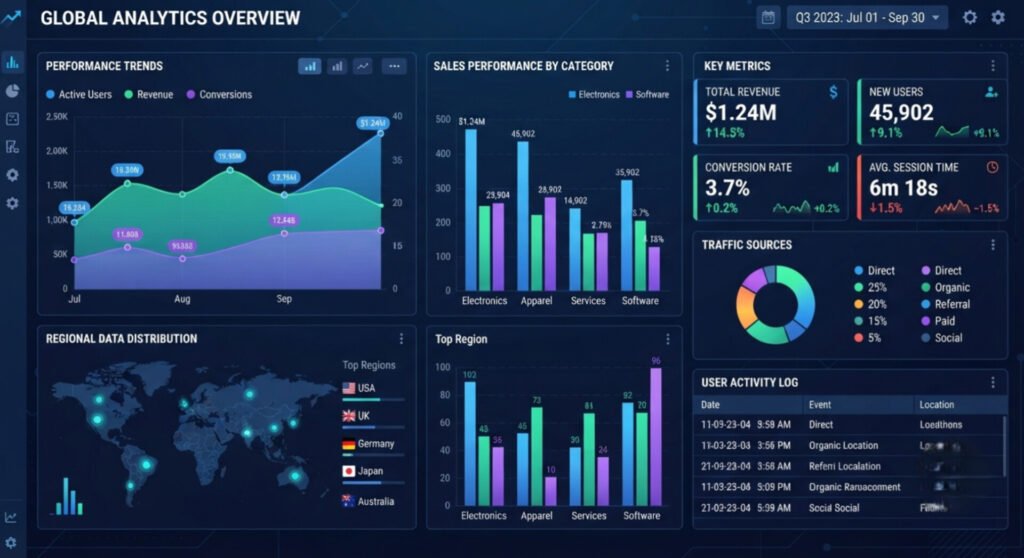
Data analytics involves collecting, cleaning, examining and presenting information so that people can make better decisions. A beginner can start with Excel, then progress to SQL, data visualisation and eventually Python. Organizations are hunting for professionals who can transform chaotic spreadsheets into predictive operational roadmaps.
For a student, mastering data analytics means moving past simple data entry. It means understanding how to clean messy datasets, isolate consumer purchasing patterns and predict inventory shortages before they impact a company’s bottom line. Imagine a student selling clothing online. Instead of simply recording weekly sales, they could analyse which products sell fastest, which price points perform best and which periods generate the most revenue. That same thinking applies inside companies. Banks analyse transactions. Retailers study purchasing patterns. Schools work with student records. Logistics companies track deliveries. The software may differ but the underlying question remains: “What does the data tell us?”
For students who enjoy mathematics, investigation or problem-solving, data analytics can be a particularly useful direction.
4. ADVANCED WEB DEVELOPMENT (FULL-STACK ARCHITECTURE)
Web development remains one of the most practical technology skills because the internet continues to be a major channel for businesses, organisations and individuals. The traditional starting point is: HTML → CSS → JavaScript.
HTML structures a webpage, CSS controls its appearance and layout and JavaScript adds behaviour and interactivity. From there, students can explore frameworks, databases, APIs and other technologies. A beginner doesn’t need to start by building the next major social network. Build a portfolio, create a website for a fictional business, build a student result interface or create a simple event-registration page. The objective is to understand how websites are constructed and how different pieces work together.
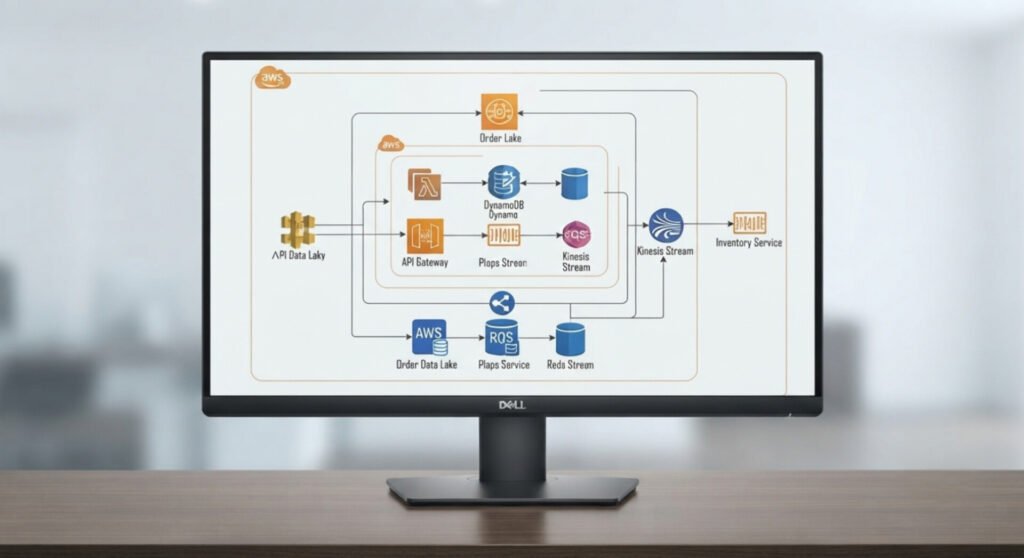
The modern economy requires Full-Stack Architects—engineers who can design responsive frontend user interfaces while simultaneously building secure, scalable backend server architectures and managing complex database relations. With high-speed internet infrastructure expanding through localized fibre initiatives, businesses are digitizing legacy processes rapidly. They require custom internal platforms, enterprise resource planning (ERP) software and highly interactive user portals that can handle thousands of concurrent transactions without crashing.
AI can now generate substantial amounts of code but that makes understanding the fundamentals more useful, not less. Someone who knows how websites work is better positioned to inspect, correct and improve AI-generated code.

5. USER INTERFACE & USER EXPERIENCE (UI/UX) DESIGN
UI/UX design is the psychological and visual science of creating digital products that are intuitive, satisfying and easy to navigate for diverse populations. A software product can feature brilliant underlying engineering but if the interface is frustrating or confusing, the product will fail commercially. UI/UX design focuses on creating digital experiences that are visually clear and easy to navigate.
A lot of businesses and companies are looking for credible UI/UX Designers to convey their brand/product message through actionable, palatable and well-conveyed graphical representations.
In Nigeria, localized design requires deep empathy for user constraints. Excellent UX designers do not just focus on beautiful colour palettes; they design for low-bandwidth environments, minimize data consumption profiles and structure user flows so that individuals with varying levels of digital literacy can complete actions effortlessly.
Students can begin with tools such as Figma while learning concepts including: wireframing, user flows, prototyping, visual hierarchy, responsive design, design systems, accessibility and user research.

6. EXECUTIVE VIRTUAL ASSISTANCE & REMOTE OPERATIONS MANAGEMENT
The global shift toward distributed workforces has transformed the administrative landscape. Founders, international executives and fast-growing organizations require remote operations specialists who can manage their digital infrastructure, streamline corporate communications and keep executive workflows optimized.
Executive Virtual Assistance has evolved past basic typing tasks. In 2026, premium virtual assistants act as operational partners who manage complex digital tools, handle customer success pipelines, orchestrate calendar logistics and coordinate remote team operations across differing time zones.
Students can manage high-level inbox sorting and client correspondence for international consultants, organizing corporate travel logistics and moderate remote project workspaces using Google Workspace (Advanced), Notion, Slack, Zoom, Zapier (for workflow automation), HubSpot or Salesforce (CRM basics) and project tracking software.

7. CONTENT CREATION & MULTIMEDIA PRODUCTION
The global attention economy runs on high-quality multimedia content. As video-first platforms dominate mobile screens across Nigeria, businesses require skilled creators who can produce engaging visual narratives that capture consumer attention within the first three seconds. Digital content creation involves translating complex corporate messaging into compelling short-form video scripts, high-conversion visual design assets and engaging audio productions. It requires an intersection of creative storytelling, brand consistency and deep technical mastery of multimedia editing software.
Students can engage in producing brand documentaries for corporate entities, executing high-engagement TikTok/YouTube short campaigns for digital startups and designing educational media for edtech initiatives. Also learning the most efficient use of Adobe Premiere Pro, DaVinci Resolve, CapCut (Advanced), Adobe Photoshop, Canva, scriptwriting methodologies and basic audio engineering/lighting principles.

8. SOFTWARE PROGRAMMING
Programming teaches a transferable way of thinking. Instead of approaching a problem as one large task, you learn to break it into smaller instructions that a computer can execute. Programming languages are the infrastructure upon which the entire digital economy is constructed. While web development focuses on the user-facing internet, pure programming involves building the high-performance engines, system utilities and data processing architectures that keep enterprise technology moving.
The strongest reason to learn programming isn’t to memorise hundreds of commands. It is to develop the ability to turn a problem into a logical solution. That ability remains useful even when AI is helping write the code as the number of programmers being sought for increases year on year.
Students should develop an understanding of variables and data types, conditions, loops, functions, data structures, debugging, problem decomposition and basic algorithms.

9. DIGITAL MARKETING
Growth in 2026 is driven by digital marketing professionals who understand consumer psychology, algorithmic search behaviours and paid acquisition metrics. Legacy advertising through billboards and television is out of reach for most modern businesses. Digital marketing is no longer about passively posting images on social media channels; it is a data-driven science. Companies hire growth marketers to deploy precise advertising budgets, track customer acquisition costs (CAC), maximize return on ad-spend and map out comprehensive conversion funnels that transform casual internet browsers into loyal, paying clients.
Students could take up scaling customer acquisition for direct-to-consumer fashion brands, managing corporate search engine marketing (SEM) campaigns and building automated email nurture tracks for B2B services on platforms like Google Ads, Meta Business Manager, Search Engine Optimization (SEO) auditing tools (SEMrush, Ahrefs), Google Analytics 4 (GA4) and learning some copywriting methodologies.

10. PRODUCT AND PROJECT MANAGEMENT
Brilliant ideas and exceptional technical talent can still result in absolute operational failure without organized leadership. Product and Project Managers serve as the operational glue that keeps cross-functional teams aligned, budgets on track and product development iterations moving toward clear market delivery goals.
While Product management involves studying market demands, defining a software product’s core features and coordinating between developers, designers and marketing teams to bring the vision to life, Project management focuses on the execution, timeline and delivery of specific tasks ensuring the work gets done on time, within scope, and under budget.
While a product manager decides what to build and why, a project manager focuses on how and when it will be completed by managing schedules, allocating resources, tracking milestones and mitigating risks.
TECH TAKEAWAY
The future is technology and your portfolio is your true certificate.
The Nigerian employment landscape is increasingly moving past traditional paper qualifications. Employers are searching for verifiable answers to one fundamental question: Can you execute the work immediately upon onboarding?
Do not wait for your university graduation ceremony to begin proving your capabilities. Identify one specialized skill from this blueprint, commit to deep daily study, integrate into active localized developer and creative networks and build a public portfolio containing undeniable proof of your competence.
The market in 2026 rewards high-tier execution; start building your leverage today.