

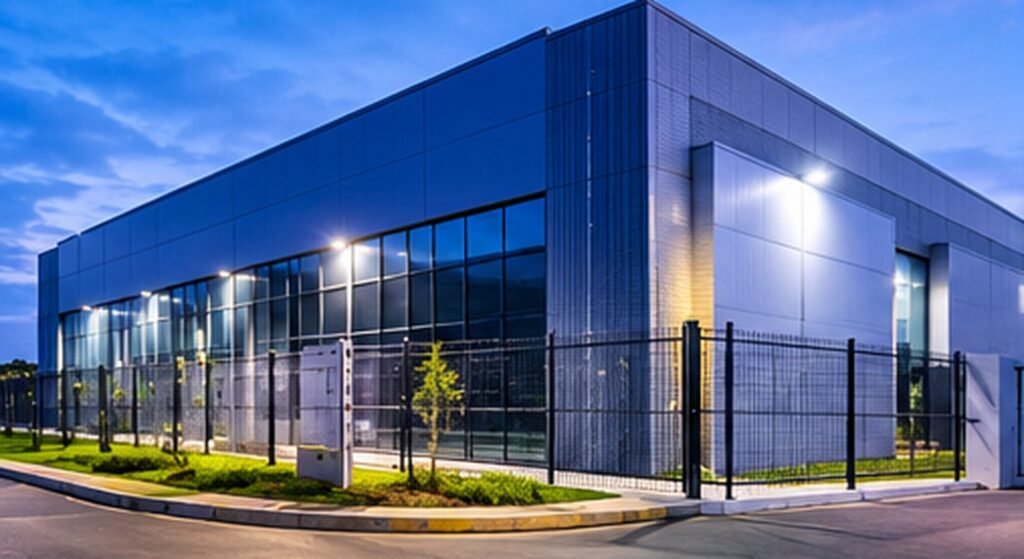
Every website you visit, file you store online and application you use depends on computing infrastructure somewhere. Much of this infrastructure operates inside data centers. As cloud computing and artificial intelligence continue to expand, demand for data centers is increasing. Nigeria is also investing in this infrastructure to support its growing digital economy.
What Is a Data Center?
A data center is a facility that houses computing equipment used to store, process, manage and distribute digital information. It contains servers, storage devices, networking equipment, power systems and cooling infrastructure. It is a large, carefully managed building filled with powerful computers that run websites, mobile applications, banking platforms, cloud services and many other digital tools.
Businesses use data centers to host websites, operate applications, manage databases and store customer information. Technology companies also depend on them to deliver cloud services, online storage, video streaming and artificial intelligence tools.
How Data Centers Work
A data center contains specialized equipment designed to handle large amounts of information. A center receives requests from connected devices which it then processes using its computing resources and sends the required information back.
Assume a client sends a request through the internet to a bank’s servers. Those servers process the request, communicate with relevant databases and retrieve the information needed. The result is then returned to your phone.

Data centers are designed to keep these services available continuously. This requires dependable electricity, cooling, network connectivity and security. A power interruption or equipment failure can affect the services hosted in the facility. Some of the main components include:
- Servers: Servers are powerful computers that run applications, process requests and manage databases. They are installed in metal structures called racks which organize equipment and make maintenance easier.
- Storage systems: These hold databases, documents, application files, backups and other digital information. They may use solid-state drives (SSDs), hard disk drives (HDDs) or specialized storage infrastructure. Some facilities duplicate data across multiple systems to reduce the risk of losing information when equipment fails.
- Networking equipment: Routers, switches and firewalls manage communication between servers and external networks. Fibre connections link data centers to internet providers, telecommunications networks and other facilities.
- Power infrastructure: Servers require continuous electricity. Data centers use equipment such as transformers, uninterruptible power supply (UPS) systems, batteries and backup generators to maintain operations when the main supply fails.
- Cooling systems: Servers generate heat while operating. Cooling equipment regulates temperature and airflow to prevent overheating. Some facilities use specialized air-conditioning systems while high-density computing environments may require liquid cooling.
- Security systems: Physical controls such as surveillance cameras, access cards and biometric checks restrict entry. Digital security measures, firewalls, protect networks, servers and stored information from unauthorized access.
These systems make a data center more than a building full of computers. They create the controlled environment required to operate critical digital infrastructure.

Types of Data Centers
Data centers are designed for different operational needs. The main types include:
- Enterprise data centers: Owned or operated by individual organizations to support internal systems. Banks, government agencies and large businesses may maintain their own facilities to manage applications, databases and sensitive information.
- Colocation data centers: Allow businesses to rent physical space, electricity, cooling and network connectivity for their own servers. This gives organizations access to professional infrastructure without the expense of building an entire facility.
- Hyperscale data centers: Built to support enormous computing and storage requirements. Major technology companies and cloud providers use them to serve large numbers of customers and handle demanding workloads.
- Cloud data centers: Provide the physical infrastructure behind cloud computing services. Customers access computing power, storage and applications over the internet without managing the underlying servers themselves. Providers such as Amazon Web Services, Microsoft Azure and Google Cloud operate extensive data center infrastructure.
- Edge data centers: Smaller facilities located closer to users or devices generating information. They reduce the distance data must travel for processing and can support applications that require faster responses, including industrial automation and telecommunications.

How Data Centers Power Cloud Computing and Artificial Intelligence
Cloud computing and artificial intelligence depend on physical computing infrastructure. Data centers provide the servers, storage and networks required to run them.
Cloud computing allows individuals and organizations to access computing resources over the internet instead of purchasing and maintaining all the hardware themselves. When a business stores files online, hosts an application or runs a database through a cloud platform, the resources are provided by physical servers in data centers.
The cloud provider manages the underlying infrastructure while customers access computing that meets their needs. This allows businesses to expand or reduce resources without building their own facilities.
Artificial Intelligence and Data Centers
Artificial intelligence systems require significant computing power to process information, train models and respond to users. Training advanced AI models involves processing large datasets through repeated calculations. Graphics processing units (GPUs) are particularly useful because they can perform many calculations simultaneously.

Data centers supporting AI workloads may contain clusters of GPUs connected through high-speed networks. They also require substantial electricity and specialized cooling systems. Even after an AI model has been trained, it needs computing resources to respond to requests. This process is called inference. When you ask an AI chatbot a question, computing infrastructure processes the request and generates a response.
Investing in Data Centers
Nigeria’s expanding digital economy is increasing demand for local computing and storage infrastructure. Businesses need reliable facilities to support financial transactions, online services, cloud applications and AI workloads.
In August 2026, the Federal Government unveiled its National Digital Cloud Policy. The policy aims to attract investment into cloud and data center infrastructure, improve government use of cloud services and strengthen local digital capabilities.
Also, in September 2026, industry stakeholders discussed a plan to increase Nigeria’s data center capacity from approximately 50 megawatts (MW) of IT load to 200MW over five years. Expanding local infrastructure would give Nigerian businesses more hosting options, support financial services and create opportunities for technology professionals. It could also improve the performance of some services by bringing computing resources closer to their users.

Tech Takeaway
Data centers provide the physical infrastructure behind much of the digital economy. They support websites, banking applications, cloud platforms and artificial intelligence services.
Expanding the country’s infrastructure creates an opportunity to support local businesses, develop technical skills and become a stronger provider of digital services across Africa. The investment plans are promising but reliable electricity, connectivity and skilled personnel will determine how much of that ambition becomes operational capacity.
As more of Nigeria’s economy moves online, data centers will become increasingly important. The cloud may feel invisible to users but the Data Centers behind it are very real.
Samic Tech Hub