

What Is Cybersecurity?
Cybersecurity is the practice of protecting computers, phones, networks, applications and digital information from unauthorized access, damage, theft, disruption or attack. Every time you create a password, receive a WhatsApp message, log into your bank account or connect your phone to Wi-Fi, you are dealing with cybersecurity. The same principle applies to a small business protecting customer records and a government protecting critical infrastructure.
All interactions on any digital device create a path to a potential attacker due to how open the internet is.
Threat and Vulnerability
A threat is something that could cause harm to an asset. The threat could come from a person, software, event or situation. A vulnerability is a weakness that could be exploited to cause harm. This distinction matters. A threat is the potential source of harm.
A vulnerability is the weakness that can make that harm possible. Consider an online account protected by the password “123456”. The person trying to break into the account represents a threat. The weak password is the vulnerability.
Cybersecurity teams spend considerable time identifying and fixing vulnerabilities before attackers can exploit them.
What Is Cybersecurity Risk?
Risk describes the possibility that a threat will exploit a vulnerability and cause harm. A simple analogy is:
Threat + Vulnerability + Potential Impact = Security Risk
Risk does not only depend on whether an attack can happen. The potential consequences also matter and it should be worthy of note that not all risks require immediate attention, at the same time; not every vulnerability has the same level of importance.
Core Concepts in Cybersecurity
- CLIENT-SERVER RELATIONSHIP is an example of how data flows from a source to a destination network.
- AUTHENTICATION is the process of submitting credentials in order to gain access to a network before authorization is exercised; a process of verifying who something or someone is. Attackers attack authentication by “mask array” or “spoofing,” i.e., the concept of assuming the identity of someone who has access. Common authentication methods include:
- Passwords
- PINs
- Security
- keys
- Fingerprints
- Facial recognition
- Authentication apps
- AUTHORIZATION determines the level of access/control granted to a user.
What is Access Control?
Access control is the process of controlling who or what can access resources and what actions they can perform. It brings authentication and authorization into practical use. In context, an organization might configure its systems so that employees can access only the files required for their jobs while Managers can access additional records.
A common principle here is “least privilege” which translates to giving a user or system the needed access to perform its intended function.
CIA Triad
One of the most important models in cybersecurity is the CIA triad. CIA is an acronym for:
- CONFIDENTIALITY is all about preventing unauthorized people from accessing information. If a customer’s personal information is supposed to be visible only to authorized employees, confidentiality controls help keep it private. Examples include:
- Data classification
- Passwords
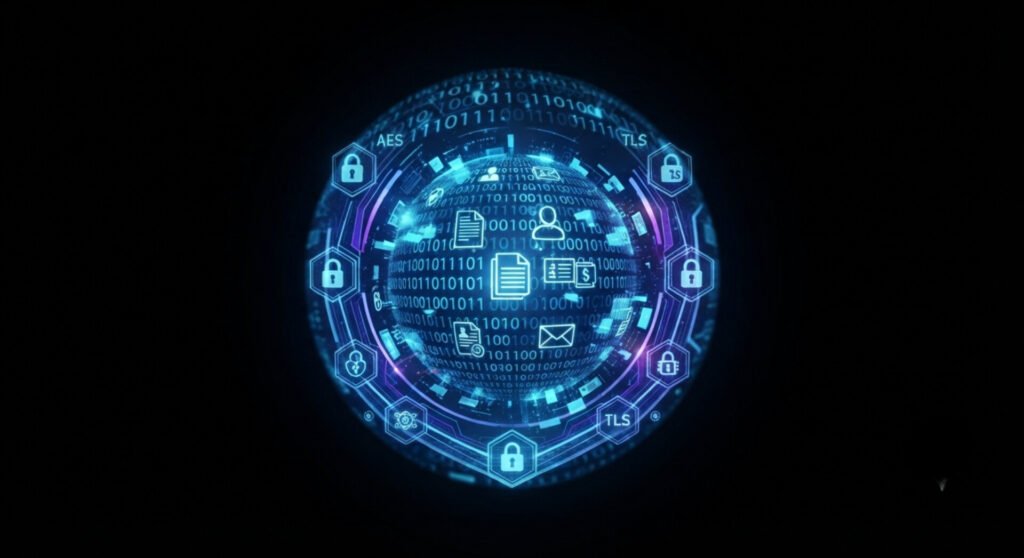
- Encryption
- Access controls
- Authentication
A confidentiality failure occurs when someone gains access to information they should not have. It follows with interception and eves-dropping which is when data is breached and integrity is compromised.
- INTEGRITY is the guarantee that data stays precise, complete and reliable from creation through disposal, safeguarded against unauthorized modification. Some security controls associated with INTEGRITY are: File permissions, Hashing, Digital signatures, Audit logs, Database controls and Change management.
Integrity matters because decisions are often based on stored information. If the information cannot be trusted, the system cannot be trusted either.
- AVAILABILITY ensures that authorized users can access systems and information when they need them. On the other hand, it also allows anyone to carry out an attack, initiating an interruption or a Denial of Service (D.O.S.).
A website that is constantly offline has an availability problem, so does a company’s internal system if employees cannot access it during working hours. Availability is one of the reasons organizations use backups, redundancy, disaster recovery plans and monitoring systems.
Why the CIA Triad Matters
Confidentiality, Integrity and Availability can sometimes compete with one another. Consider a highly sensitive database. Strict access controls may improve Confidentiality; however, if access restrictions are configured so tightly that legitimate employees cannot use the database when necessary, Availability suffers.
Similarly, adding extensive security checks may improve protection but could make a system slower or more difficult to use. Good cybersecurity therefore involves more than adding as many security controls as possible. The goal is to protect systems while allowing legitimate users to do their jobs.
What Is a Cyber Attack?
A cyberattack is an intentional attempt to gain unauthorized access to a computer system, network, or digital information to disrupt its operation. Cyberattacks can include phishing, malware infections, password attacks, denial-of-service (D.O.S.) attacks, ransomware and exploitation of software vulnerabilities. Some attacks are aimed at individuals. Others target businesses, financial institutions, government agencies or critical infrastructure. The method depends on the target and what the attacker wants.
What Are the Main Cybersecurity Threats?
Cyber threats take different forms. Some attack software or networks directly while others target devices. Understanding the common ones makes suspicious activity easier to recognise.
Phishing
Phishing is a type of cyberattack in which someone tries to trick or con you into revealing sensitive information or performing an action that benefits the attacker. The message may appear to come from a bank, social media platform, employer, delivery company or someone you know. You might receive an email claiming that your account will be suspended unless you verify your details. A link takes you to a website that looks legitimate. You enter your username and password. The attacker gets them.
Phishing can happen through email, text messages, social media, messaging applications and even phone calls. Attackers often create a sense of urgency because people are more likely to act without checking when they believe something needs immediate attention.
Malware
Malware means malicious software. It is software designed to damage systems, steal information, spy on users or give an attacker unauthorized access. Not every malicious program behaves in the same way. Some are designed to steal. Others disrupt operations. Some remain hidden for long periods.
This is why downloading software from unknown websites or opening suspicious attachments can be risky. There are several forms:
- Viruses can attach themselves to files and spread when those files are opened.
- Trojans disguise themselves as legitimate software or files while performing malicious actions in the background.
- Spyware can monitor activity or collect information without the user’s knowledge.
- Ransomware can prevent access to files or systems and demand payment from the victim.
What Is Two-Factor Authentication?
Two-factor authentication, commonly called 2FA, adds another security step after your password. Without 2FA, someone who obtains your password may be able to log into your account. But with 2FA, a second factor will be requested, such as a code generated by an authentication app. This creates an additional barrier, though more reliable but not entirely perfect. An attacker may still attempt to trick users into giving away verification codes or exploit weaknesses in account recovery. Still, enabling 2FA on important accounts can reduce the damage caused by a stolen password.
Cybersecurity vs Information Security
The concepts of Cybersecurity and information security are closely related but are not exactly the same thing. Cybersecurity generally focuses on protecting digital systems, networks, devices and data from cyber threats, etc. Whereas Information Security has a broader focus: protecting information from unauthorized access, alteration, disclosure, destruction or loss regardless of whether that information is stored digitally or physically.
Cybersecurity might involve protecting a database from hackers and securing the network through which employees access it. Information security could also involve controlling who is allowed to view printed copies, deciding how long records should be retained and establishing procedures for securely disposing of sensitive documents.
Cybersecurity can be viewed as an important part of the wider information security discipline.
Why Is Cybersecurity Important?
People now store a large part of their lives online. Photos, emails, financial information, identification documents, work files and private conversations can all exist on connected devices and online services.
These create opportunities for attackers. A compromised account can expose passwords and give someone access to several services if the same password has been reused. Malware can lock files or secretly collect information. A successful attack against a business can interrupt operations and expose customer data.
Cybersecurity, therefore, is not only an IT department’s responsibility. It starts with everyday decisions. For businesses, the stakes are even higher.
What Skills Do You Need for Cybersecurity?
Cybersecurity is not one single skill. Professionals need to understand how technology works before they can effectively protect it. Networking is a useful foundation because computers and devices communicate through networks. Understanding IP addresses, DNS, ports, protocols and network traffic becomes increasingly valuable as you progress. Operating systems matter too.
Cybersecurity professionals often work with Windows and Linux environments and need to understand how users, processes, files and permissions work.
Programming is helpful, although you do not necessarily need to become a software engineer. Other valuable skills include:
- Threat detection
- Vulnerability assessment
- Incident response
- Digital forensics
- Risk assessment
- Identity and access management
- Security monitoring
- Cloud security
- Communication and documentation

What Careers Can You Have in Cybersecurity?
Cybersecurity has several career paths.
- A security analyst may monitor systems, investigate suspicious activity and respond to security incidents.
- A penetration tester is authorised to test systems for weaknesses so organisations can fix them before criminals exploit them.
- A security engineer may design and maintain security controls across an organisation’s infrastructure.
- An incident responder investigates active or suspected security incidents and works to contain and recover from them.
- Other paths include cloud security, application security, digital forensics, governance, risk and compliance and security architecture.
The right path depends on your interests.
How Can a Beginner Start Learning Cybersecurity?
Do not begin by trying to learn everything.
- Start with computing fundamentals. Understand how computers, operating systems, networks and websites work.
- Then learn basic security concepts such as authentication, encryption, vulnerabilities, malware, phishing and access control.
- After that, practical exercises become useful.
- You can create a controlled laboratory environment where you can safely examine operating systems, network traffic and security tools.
Ethical cybersecurity practice must stay within systems you own or have explicit permission to test. As your knowledge grows, choose an area to explore more deeply. Cybersecurity is too broad for one person to master every part of it.

Tech Takeaway
Cybersecurity is ultimately about protecting valuable systems and information from harm. To understand how that protection works, you need to know the language behind it. Assets are what need protection. Threats are potential sources of harm. Vulnerabilities are weaknesses. Risk describes the potential consequences. Authentication verifies identity. Authorization determines what an authenticated user can do. Access control puts those permissions into practice.
And the CIA triad provides three central security objectives: confidentiality, integrity and availability. Once these ideas become familiar, more advanced cybersecurity topics become much easier to follow.
Samic Tech Hub