

What Is an API?
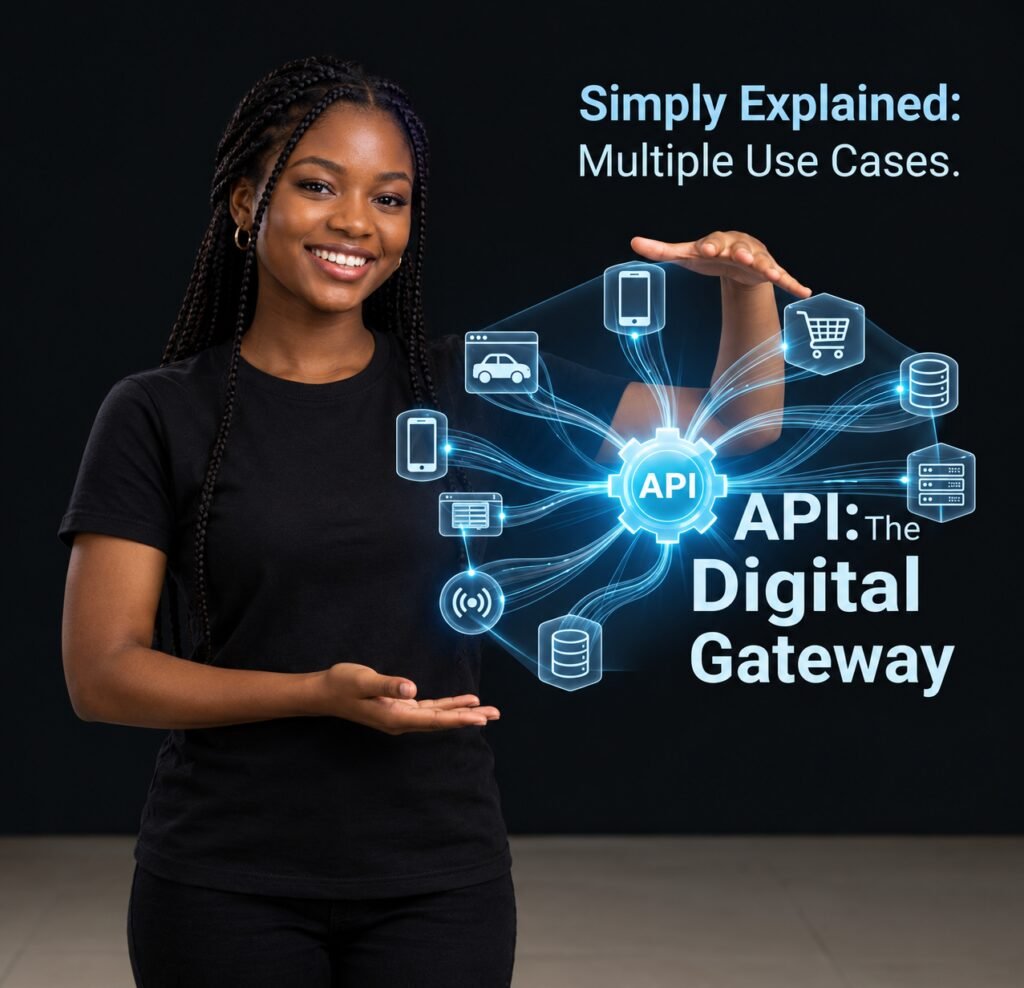
An API or Application Programming Interface, defines a set of operations, rules and data structures through which one software component can interact with another. The concept of an interface is central. An interface specifies what can be accessed and how that access should occur without necessarily specifying how the underlying functionality is implemented. MDN describes an API as a set of features and rules that enable interaction with software and characterizes it as a contract between the application providing the interface and the software interacting with it.
The distinction between interface and implementation is therefore fundamental. The implementation contains the actual logic used to produce a result. The interface exposes the operations that another component is permitted to invoke. A consumer of an API should generally be able to use the interface without knowing the internal algorithms, database structures or architectural decisions behind it. This property is known as abstraction.
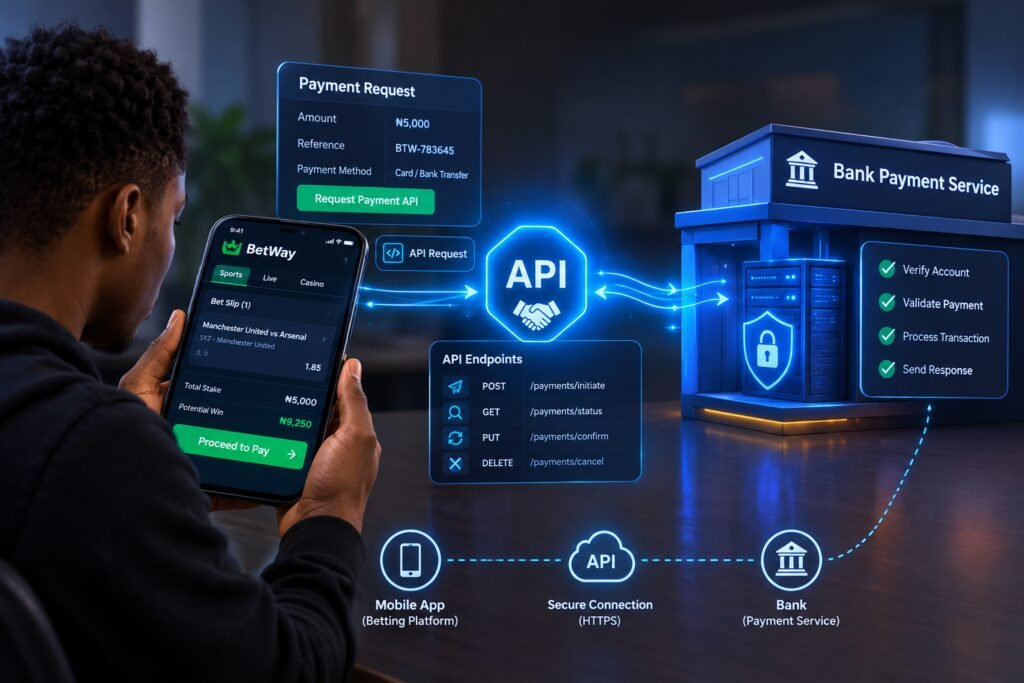
A banking application may need to communicate with a payment service. For these interactions to work reliably, the systems need an agreed mechanism for communication. This is where the Application Programming Interface (API) becomes important.

APIs and Abstraction
Abstraction is one of the principal reasons interfaces exist in software engineering. A complex system can expose a relatively simple interface while retaining control over the complexity of its implementation. The consumer interacts with the defined interface rather than the internal system. This separation produces an architectural boundary.
Changes can potentially be made behind that boundary without requiring consumers to understand the internal implementation. The condition, however, is that the provider continues to honour the interface’s defined behaviour. This is why an API can be understood as a contract.
A bank may have databases, transaction-processing systems, identity systems, fraud controls, account-management services and other internal components. An external application or Agentic AI platform requesting a customer’s account information does not need direct knowledge of all those systems. The bank can expose an API that provides a defined operation. The external application interacts with the API. The API and the systems behind it handle the internal complexity. This is called abstraction.
The contract establishes expectations between the provider and consumer. It can define available operations, required inputs, output structures, error conditions, authentication requirements and other behavioural rules. The API consumer therefore depends primarily on the contract rather than the implementation. That distinction becomes increasingly important as software systems become larger and more distributed.
The API Contract
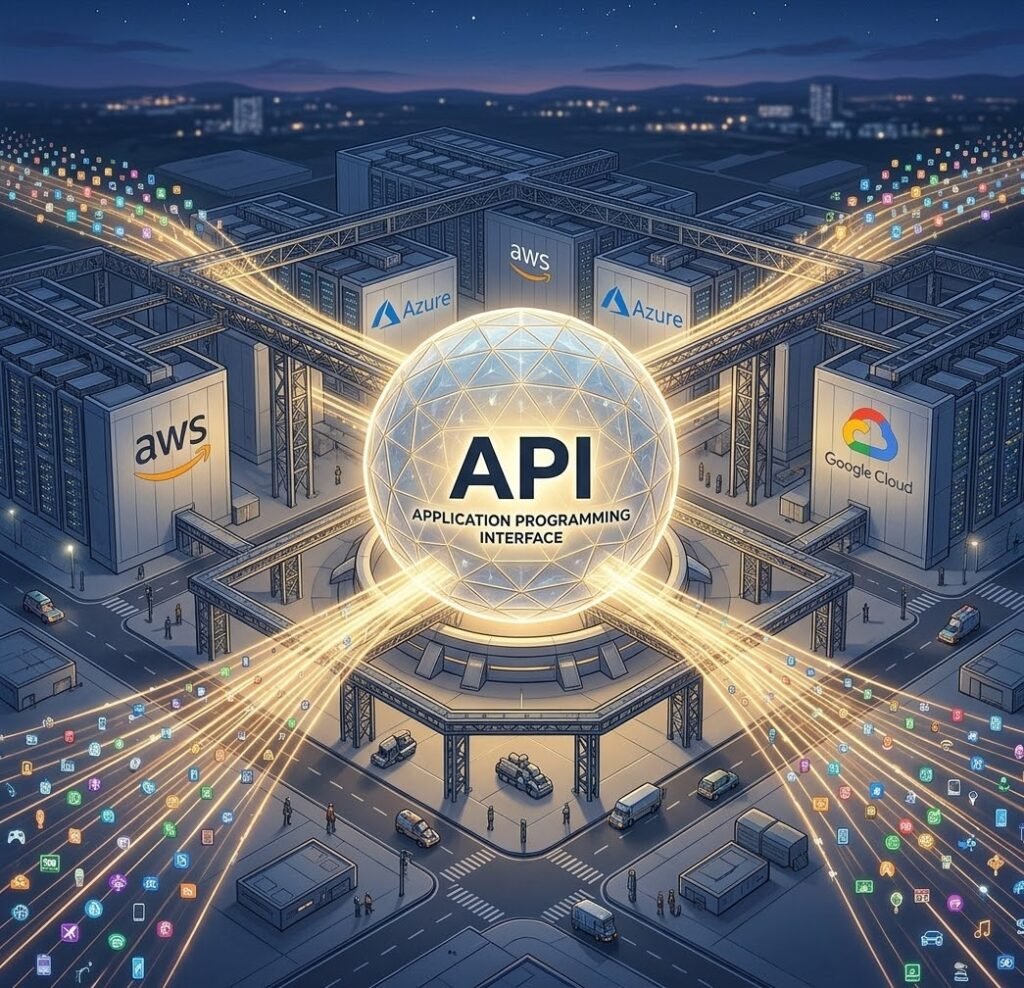
An API contract defines the interaction that a consumer can expect from an API. The contract can specify available operations, required parameters, data types, response structures, authentication requirements, authorization rules, error responses, operational constraints, versioning expectations etc. The purpose is consistency. Without a defined contract, independently developed software components would have to understand the internal behaviour of one another before they could interact reliably.
The API specification therefore becomes a form of communication between software teams as well as between software systems. This is one reason API documentation is an engineering concern rather than merely supporting material for developers. Documentation communicates the contract that consumers are expected to follow.
API Client, Server and Resource
API terminology can be confusing because several related concepts are often treated as if they mean the same thing.
- The client is the component making a request to an API.
- The server or service providing the API receives and processes that request.
- A resource refers to an entity or representation that the API makes available through its interface. Depending on the system, resources may represent data, operations or other capabilities.
- An endpoint is a defined access point through which an API operation can be invoked, particularly in web APIs.
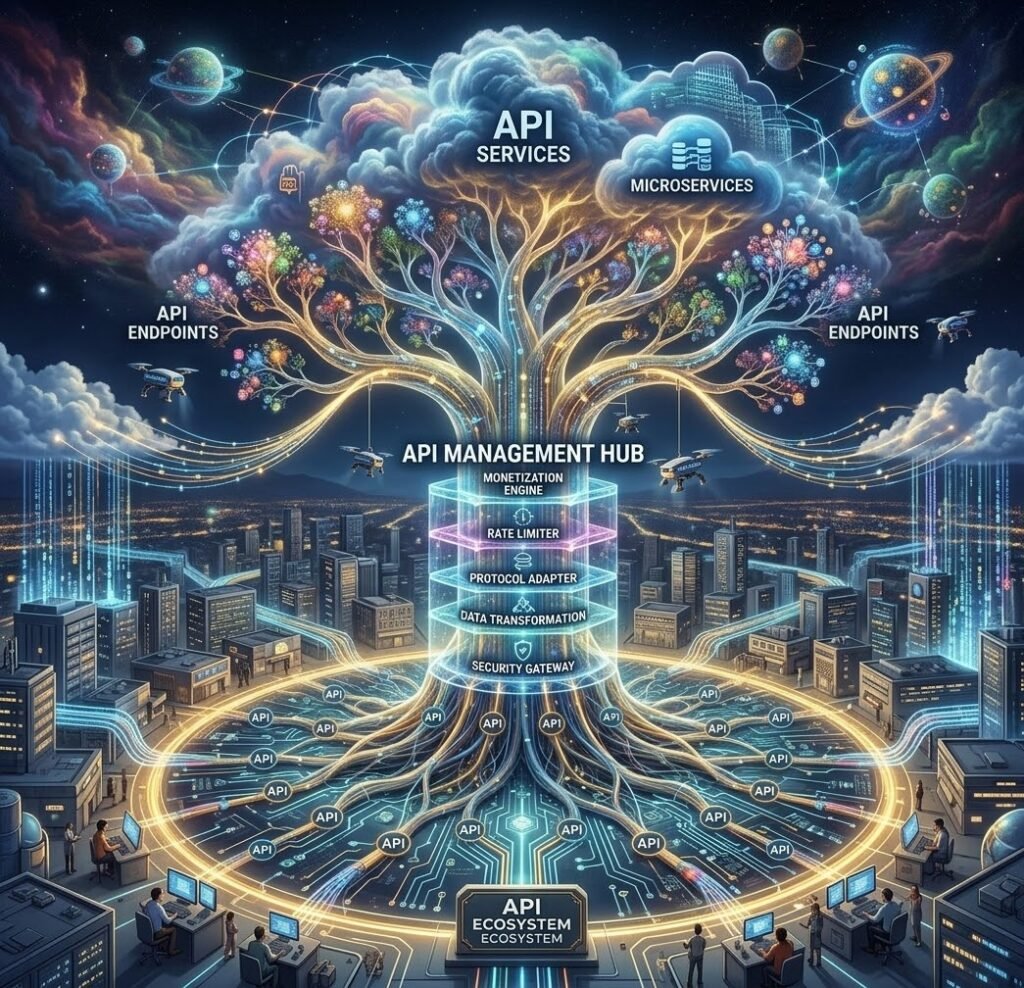
These concepts describe different parts of the same interaction. The client consumes the interface. The endpoint identifies where a particular operation can be accessed. The server processes the request. The resulting response communicates the outcome.
The distinction is important because an API is not necessarily a single endpoint. A complete API can contain numerous endpoints and operations that together form its public interface.
How an API Interaction Works
A typical web API interaction can be represented as:
Client → Request → API → Processing → Response
The client submits a request according to the API specification. The request can contain information required to identify the operation, supply input data and establish the context in which the request is being made. The API receives the request and determines how it should be processed. Depending on the system, processing can involve authentication, authorization, validation, retrieval or modification of data, execution of business logic and communication with other internal services. And the system then produces a response.
A response can contain requested data, confirmation of an operation or an error describing why the requested operation could not be completed. This request-response model is particularly common in web APIs, although not every API interaction follows precisely the same model.
The important principle is that the interface establishes a predictable method of interaction between the consumer and the service.

APIs Are Broader Than Web APIs
An API is not inherently a web technology. The concept predates modern web APIs and applies to software interfaces more generally. An operating system can expose APIs through which applications access system functionality. A programming language can provide APIs through libraries. A software component can expose an interface to other components within the same application.
Web APIs are a specific category in which software functionality is made accessible through web-based communication mechanisms. This distinction matters because treating “API” as synonymous with “web API” limits the concept unnecessarily. The defining characteristic of an API is the interface not the network protocol used to expose it.
Versioning
APIs can have many consumers. Changing an existing interface can therefore have consequences beyond the system where the change is made. Versioning provides one mechanism for managing changes to an API contract while maintaining compatibility with existing consumers.
Suppose a company changes the structure of an API response. Applications that depend on the previous structure may stop functioning correctly. This is why API providers have to consider backward compatibility, versioning and lifecycle management. Versioning provides a mechanism for introducing changes while managing existing consumers. That is why an organization might maintain an older version of an API while consumers migrate to a newer version.
The underlying issue is dependency. Once another system depends on an API, changes to the interface become potentially consequential.
Documentation
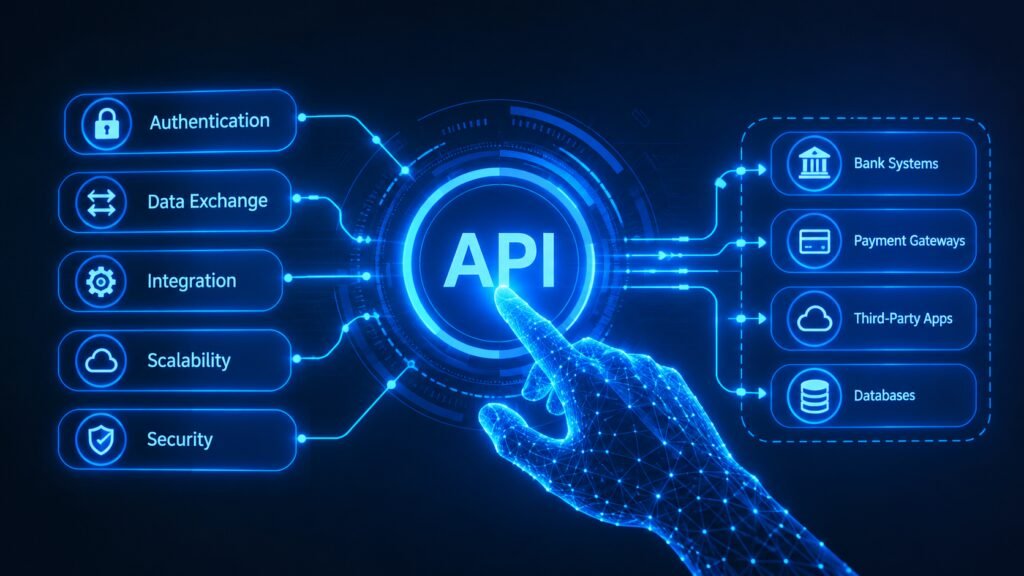
A technically correct API can still be difficult to use if its contract is poorly documented. Documentation needs to communicate available operations, inputs, outputs, authentication requirements, errors and other relevant behaviour. In larger environments, API documentation also contributes to governance and inventory management.
Authentication and Authorization
Security is one of the most important dimensions of API design. Two concepts require particular distinction: authentication and authorization. While Authentication establishes the identity of the entity making a request, Authorization determines what that entity is permitted to access or perform. The distinction becomes especially important when APIs expose multiple resources, users or functions. A system can correctly identify a legitimate user and still make a security error if it fails to verify that the user has permission to access the particular resource requested.
API keys, access tokens and other credentials can participate in authentication and access-control mechanisms but possessing a credential does not automatically imply that every operation should be permitted. Security, therefore, has to be considered at the levels of resources, properties and functions, not merely at the level of login.
API Inventory and Lifecycle Management
One of the less visible aspects of API management is knowing what APIs actually exist. Large organizations can accumulate multiple API versions, legacy interfaces, internal services and externally exposed endpoints. An API that is forgotten or poorly documented can become a security and governance problem. OWASP identifies Improper Inventory Management as an API security risk and specifically highlights the importance of maintaining an accurate inventory of hosts, deployed API versions and endpoints. This creates an important distinction between API development and API management.

Development concerns building the interface and its underlying functionality. Management concerns the API across its lifecycle: publication, documentation, authentication, monitoring, versioning, change management, deprecation and eventual retirement. An organization that builds APIs without managing their lifecycle can accumulate technical debt and security exposure.
APIs and Third-Party Dependencies
APIs can also introduce dependencies beyond an organization’s direct control. An application may consume services provided by another organization. The security and reliability of that external service can therefore become relevant to the consuming system. OWASP identifies Unsafe Consumption of APIs as a specific API security risk. It notes that developers may place greater trust in information received from third-party APIs than in user-supplied information, potentially resulting in weaker validation and security controls. This illustrates a wider principle of distributed architecture.
Integration creates dependency. The technical ability to connect systems does not remove the need to assess what is being trusted, how data is validated, how failures are handled and what happens if the dependency becomes unavailable or compromised.
APIs and Interoperability in Nigeria’s Open Banking Framework
Nigeria’s Open Banking framework provides a particularly relevant case for understanding APIs as infrastructure rather than simply programming tools. The Central Bank of Nigeria’s 2021 Regulatory Framework for Open Banking established principles for data sharing across the banking and payments ecosystem and explicitly included requirements relating to API access, API design and information security.
The framework is significant because interoperability in financial services cannot be treated as unrestricted technical access. Financial information is sensitive and access must operate within defined regulatory and security conditions.
Open Banking is not simply the act of making banking data available through APIs. It represents an attempt to create a controlled interoperability framework in which technical interfaces operate within regulatory and consent requirements. The Nigerian case illustrates how API architecture can extend beyond software engineering into questions of governance, data ownership, security and institutional coordination.
APIs and Modern Software Architecture
The broader significance of APIs becomes clearer when viewed through software architecture. Modern systems are increasingly composed of multiple services and components rather than one undifferentiated application.
APIs provide the interfaces through which those components can interact. This can support decoupling because consumers can depend on an interface without depending directly on the provider’s internal implementation. It can also support interoperability because independently developed systems can communicate through defined standards.
Why Understanding APIs Matters
Understanding APIs is increasingly relevant beyond software development itself.
- For software engineers, APIs are part of the architecture of applications and distributed systems.
- For cybersecurity professionals, APIs represent important attack surfaces and access-control boundaries.
- For product managers, API availability and design can influence what capabilities a product can integrate and how its technical dependencies are structured.
- For technology businesses, APIs can determine how products participate in larger digital ecosystems.
- For financial institutions and fintech companies, APIs are increasingly relevant to interoperability, data exchange and service integration.
The underlying concept remains the same across these contexts: an API establishes a defined interface through which one software component can interact with another. Understanding that interface means understanding both what is exposed and what remains behind the boundary.
Tech Takeaway
APIs are fundamental to contemporary software architecture. They provide defined mechanisms through which software components can expose functionality, request services and exchange information without requiring direct knowledge of one another’s internal implementation.
The importance of APIs extends beyond web development. They are used to structure interactions between software components, operating systems, databases, internal services and external platforms. In distributed systems, APIs can therefore become the boundary through which independent components interact. Yet the term is frequently reduced to the idea that an API is simply “a way for two applications to communicate.” While technically useful as an introduction, that definition is incomplete. An API is more precisely an interface specification that defines how software can interact with an exposed capability.
Understanding this provides a better foundation for understanding software integration, cloud computing, fintech infrastructure, cybersecurity and digital platforms.
However, exposing an interface also creates responsibilities. The contract has to be documented and maintained. Changes have to be managed. Access has to be authenticated and authorized. Data has to be protected. External dependencies have to be treated as dependencies. APIs have to be catalogued and managed throughout their lifecycle.
The central idea is therefore straightforward but important: An API is a defined boundary between software systems. It determines how functionality or information can be requested, what rules govern that interaction and what the consuming system can expect in return. Once APIs are understood in those terms, they become easier to recognize not as isolated developer tools but as a fundamental architectural mechanism behind interoperable digital systems.
Samic Tech Hub